
That “bargain” timber fence you’re considering might actually be the most expensive investment you ever make for your garden. Most homeowners in Berkshire want a boundary that looks great and stays standing when the winter storms roll in; however, the constant cycle of staining and repairing traditional panels is both time-consuming and costly. When weighing up composite vs wood fencing bracknell residents often feel torn between the classic appeal of timber and the modern resilience of newer materials. It’s a common dilemma, especially when trying to decipher jargon like “feather edge” versus “closeboard” whilst managing a strict budget.
This guide provides the definitive comparison you need to find the perfect balance of cost, durability, and style for your property. We’ll show you how to choose a fence that survives the harshest Berkshire winters and adds genuine kerb value to your home. You will discover the long-term benefits of each material, from the initial installation costs to the prospect of enjoying a maintenance-free garden for the next 15 to 20 years. Whether you prefer the traditional charm of treated wood or the “fit and forget” convenience of composite, we provide the local expertise to help you make an informed choice for your home.
Key Takeaways
- Understand the core differences between traditional feather edge timber and modern composite blends to determine which material suits your garden’s footprint.
- Learn how Bracknell’s specific climate and winter storm patterns affect the lifespan and stability of different fencing types.
- Evaluate the lifetime value of composite vs wood fencing bracknell by weighing lower upfront costs against long-term maintenance requirements.
- Discover which aesthetic options, from natural wood grains to contemporary composite finishes, best enhance the kerb appeal of Berkshire homes.
- Access a practical decision-making checklist to help you choose between the classic charm of timber and the durability of modern materials.
Understanding the Basics: What Defines Composite and Wood Fencing?
Choosing the right boundary for your garden involves more than just picking a colour. It’s about understanding how materials react to the Berkshire climate and soil. When comparing composite vs wood fencing bracknell residents must balance the timeless charm of heritage timber with the high-performance benefits of modern engineering. Both materials serve a clear purpose; however, their composition determines how much time you’ll spend on a ladder with a paintbrush in the years to come.
Traditional Timber: The Berkshire Standard
Timber remains the most popular choice for local gardens due to its natural warmth and versatility. We specialise in closeboard fencing installation, which utilises vertical feather edge boards overlapped for maximum privacy and strength. This style is the “gold standard” for Berkshire properties because it offers a sturdy barrier against the elements.
To ensure these fences last, the wood must be “tanalised” or pressure-treated. This industrial process involves:
- Placing the timber in a vacuum chamber to remove air from the wood cells.
- Flooding the chamber with high-pressure preservatives that penetrate deep into the grain.
- Allowing the treatment to bond with the wood fibres to provide long-term protection.
This treatment is essential for resisting rot in damp Berkshire soil. Timber is also the easiest material to customise. It’s ideal for gardens with steep inclines or irregular boundaries where standard panels simply won’t fit without looking messy.
Modern Composite: The Low-Maintenance Challenger
If you want to avoid the annual chore of staining your fence, Wood-plastic composite (WPC) is a compelling alternative. This material is manufactured by blending recycled wood fibres with plastic polymers to create a dense, weather-resistant board. It provides a contemporary look that stays consistent year after year.
Composite has evolved significantly. Modern panels no longer look like shiny plastic; they feature embossed grains that closely mimic natural timber. The benefits for a Bracknell garden include:
- Moisture Resistance: The polymer content prevents the boards from absorbing water. This effectively stops the rot and warping that often plagues wooden panels.
- Colour Retention: Composite doesn’t suffer from the “silvering” effect that turns untreated wood grey. The colour you choose on day one is the colour you’ll see in a decade.
- Durability: These panels are designed to be robust. They don’t splinter or crack, making them a safe choice for families with pets or children.
Whilst the material is incredibly resilient, it still requires a professional touch for installation. Proper spacing is vital to account for the natural expansion and contraction of the polymers. A local expert understands how to secure these systems so they remain stable and straight for decades.
Performance and Durability: The Berkshire Weather Test
Bracknell gardens face a specific set of challenges. High winter rainfall and gusty winds test the structural integrity of every boundary. When comparing composite vs wood fencing bracknell homeowners must consider how these materials handle constant dampness. Timber is an organic material; it naturally reacts to moisture by expanding and contracting. Without the right protection, this movement leads to warping or “wind-catch” during high gusts. Composite offers a different profile. It doesn’t absorb water, which makes it incredibly stable during the driving rain common in Berkshire.
Durability isn’t just about the boards themselves. It’s about how the entire system resists environmental degradation. Research into fencing material choices shows that a material’s lifespan is heavily influenced by its resistance to moisture and fungal decay. For local properties, this resistance is often the difference between a fence that stands for 25 years and one that requires replacement after a single decade of neglect.
Resisting Rot and Decay in Berkshire Soil
Much of Berkshire sits on clay-heavy soil. This type of ground holds onto water for long periods, creating a “wet foot” environment that is particularly harsh on fence posts. Timber is naturally vulnerable to this moisture. To combat this, we always recommend the use of concrete posts and gravel boards. These components act as a physical barrier, keeping your wooden panels away from direct soil contact and significantly extending their life.
Composite materials provide a total barrier against ground-level moisture. They simply cannot rot, even in the dampest corners of a garden. Beyond moisture, you also have to consider the sun. UV resistance ensures that your panels won’t become brittle or lose their structural integrity when exposed to the intense midday sun in south-facing gardens. If your current boundary is leaning after the last storm, our team can assess whether a repair or a full upgrade is your best path forward at Bracknell Fencing and Gates.
Storm Resilience and Structural Strength
Storms are the ultimate test for any fence. Feather edge panels have a natural “give” because the individual boards can move slightly against one another. This flexibility can help them survive high winds by dissipating pressure. In contrast, composite boards are more rigid. This rigidity provides a solid, premium feel, but it demands professional installation. Because the panels don’t flex, the wind pressure is transferred directly to the posts. If those posts aren’t anchored deep into the Berkshire ground, the entire structure is at risk.
Maintenance plays a huge role in how these materials perform over time. To stay strong, wood needs a fresh coat of preservative every two years. This keeps the grain sealed and prevents water from getting into the fibres. Composite stays silent and strong with almost no intervention. Whilst wood requires this ongoing labour to remain resilient, composite simply needs an occasional wash to stay in top condition.
Aesthetics and Style: Matching Your Bracknell Property
Your garden boundary is more than just a physical barrier; it’s the frame for your entire property. In Bracknell, we see a diverse range of architectural styles, from Victorian period homes to the sleek, modern developments in Jennett’s Park. Choosing between composite vs wood fencing bracknell often depends on which material sits most naturally against your house. Timber offers a classic, rustic feel that softens a garden’s edges. Composite provides a sharp, architectural finish that suits contemporary Berkshire lifestyles. If you’re looking for inspiration before committing to a material, exploring the latest modern garden fence ideas Berkshire homeowners are adopting for 2026 can help you visualise how different styles transform a property.
Traditional Charm for Period Homes
For older neighbourhoods in the area, closeboard fencing remains the gold standard for privacy and style. It provides a solid, traditional backdrop that ages gracefully amongst established trees and shrubs. One of the biggest advantages of timber is its flexibility. You can paint or stain the wood to perfectly match your existing garden gate installation or property trims. This ability to customise ensures your fence respects the heritage of your home whilst providing a secure boundary.
Contemporary Excellence for New Developments
Modern Berkshire homes often feature anthracite grey window frames and expansive bi-fold doors. Composite fencing is the ideal partner for this aesthetic. It offers a level of uniformity that timber simply can’t match. Every panel is perfectly straight and identical in colour. This consistency is vital for long boundaries where you want a clean, uninterrupted line. Many homeowners are now opting for “slatted” composite styles. These mimic the look of luxury hotel courtyards and provide a high-end, designer feel to a standard garden plot. To complete this contemporary look, pairing your new fence with modern driveway gates in Bracknell creates a cohesive, high-specification entrance that enhances your property’s kerb appeal from the street.
While the initial look is important, you must consider how that aesthetic holds up over time. Independent research on wood-plastic composite durability confirms that these engineered materials retain their finish against weathering far better than untreated wood. This means the contemporary grey or deep brown you choose today won’t fade into a patchy, silvered mess after a few wet winters. It stays looking “just installed” for years with minimal effort.
Consider your garden’s primary purpose when choosing a style. If you need total privacy, solid closeboard or tongue-and-groove composite is your best bet. For those who want to maintain a sense of space and let light through, decorative slatted panels work well in both materials. Timber slats offer a softer, more organic division. Composite slats provide a bolder, more structured look that requires zero painting to stay sharp and stylish.
Cost Analysis: Initial Investment vs Lifetime Value
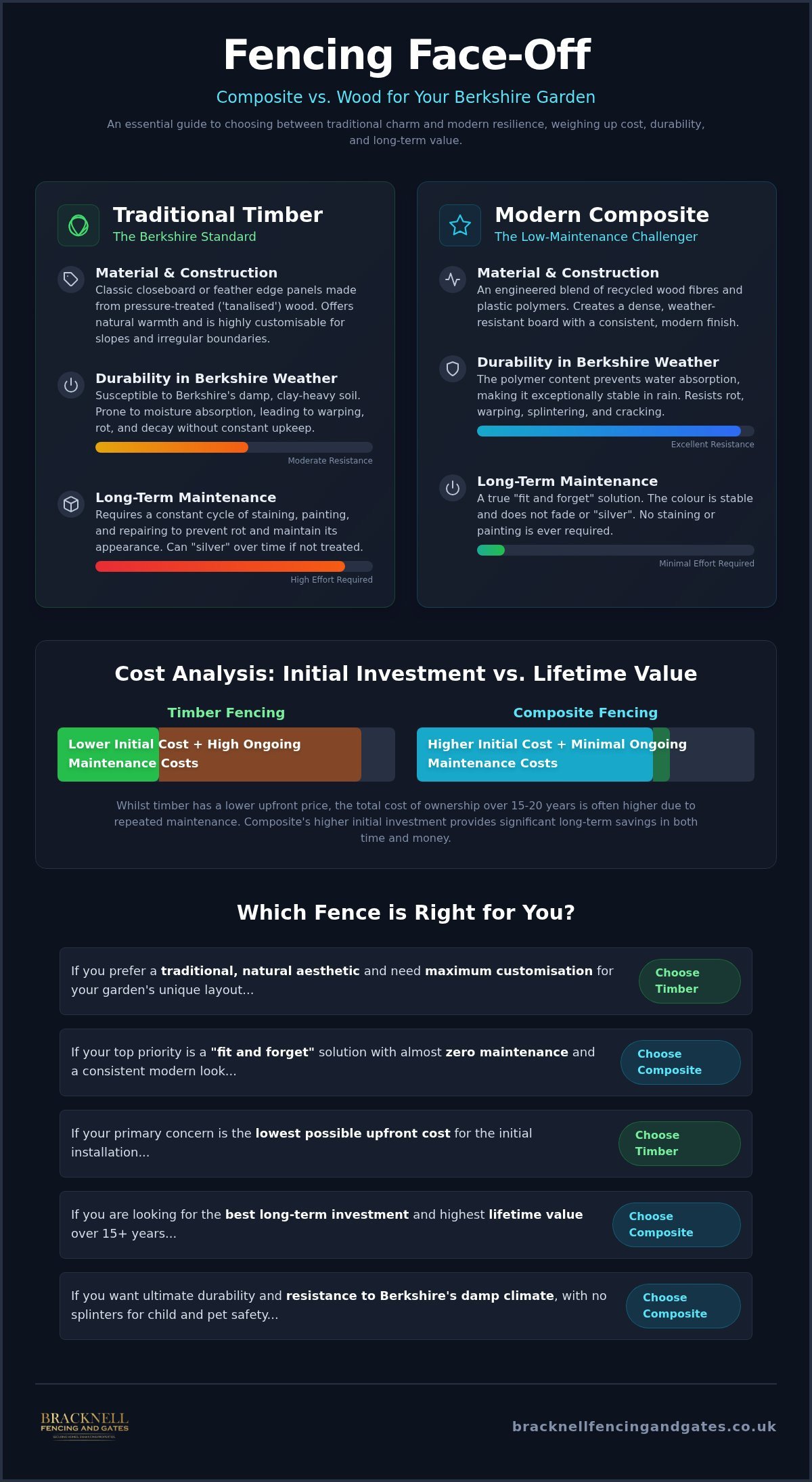
When planning your garden budget, it’s easy to focus on the quote you receive today. However, the true cost of composite vs wood fencing bracknell only becomes clear when you look at the next decade. Timber is undeniably cheaper to install initially. It’s a budget-friendly way to secure your boundary. Composite requires a larger upfront investment but eliminates the recurring expenses that catch many Berkshire homeowners by surprise.
Several factors influence the final composite fencing prices in Berkshire, including site access and ground conditions. While the initial bill is higher, you’re effectively pre-paying for twenty years of maintenance. Professional installation ensures these materials are fitted correctly to prevent future structural issues. This long-term view is essential for anyone planning to stay in their property for more than a few years.
The 20-Year Cost Comparison
Timber maintenance is a hidden drain on your wallet. Every two to three years, you’ll need to spend money on high-quality stains, brushes, and potentially professional labour. If you don’t keep up with this, the wood becomes vulnerable to the damp Berkshire climate. Over a 20-year period, the cost of these materials and the time spent applying them can add up to thousands of pounds. There’s also the risk of storm damage. High winds in our area often claim older timber panels, necessitating expensive replacements. While a typical timber fence might last 10 to 15 years in local soil, composite often comes with a 25-year guarantee against rot and decay.
Property Value and Return on Investment
A premium fence is an investment in your home’s kerb appeal. For many residents comparing composite vs wood fencing bracknell, the decision often rests on long-term resale value. For Bracknell buyers, a high-quality composite fence is a major selling point. It signals that the property has been well-maintained and won’t require immediate work. Conversely, “cheap” fencing can lead to lower valuations during property surveys if the panels show signs of rot or instability.
The real return on investment isn’t just financial. It’s the “peace of mind” you get during a winter gale and the reclaimed weekends you’ll spend enjoying your garden instead of painting it. If you’re ready to upgrade your boundary with a durable solution, contact our team for a detailed assessment of your garden’s needs.
Making the Final Choice: Which Fence is Right for You?
Selecting the right boundary is a personal decision that balances your current lifestyle with your future plans. For many homeowners comparing composite vs wood fencing bracknell, the right answer depends on how long they intend to stay in their property. If you’re planning a “forever home”, the durability of modern materials is hard to beat. However, if you’re looking for a cost-effective way to secure a rental property or maintain a heritage aesthetic, traditional timber remains a reliable option. We pride ourselves on being a “safe pair of hands” for either choice, ensuring every installation meets our professional standards.
Decision Matrix: Wood or Composite?
To help you decide, consider these three critical factors that impact your daily life and your wallet:
- Assessing your budget: Do you have the capital for a larger upfront investment today? Composite costs more at the start, but timber requires ongoing financial planning for stains and potential repairs every few years.
- Assessing your time: Are you happy to spend a weekend painting every other year? If your schedule is already packed, the “fit and forget” nature of composite is a significant advantage for busy Berkshire families.
- Assessing your style: Does your garden require a bespoke, hand-built finish to navigate steep slopes or established trees? Timber is highly adaptable for irregular shapes, whilst composite offers a standardised, architectural look that suits modern developments. Reviewing the top modern garden fence ideas for Berkshire properties in 2026 can give you a clearer picture of what’s achievable with each material.
When to Choose Wood or Composite
Traditional timber is the best choice if you prefer the authentic scent and texture of natural wood. It’s ideal for those who live in period properties where modern materials might look out of place. It’s also the sensible choice if you’re working with a tighter immediate budget or if you only plan to stay in your current home for a few years.
On the other hand, composite is the strategic choice for long-term residents. It’s particularly effective in high-wind areas of Bracknell where the rigidity of the panels provides a sense of permanence. If you value a consistent finish that won’t fade or rot, composite offers the best return on your investment over two decades.
Next Steps for Your Bracknell Project
The best way to move forward is with a local site survey. Our Berkshire team will visit your garden to assess the ground conditions and take precise measurements. We’ll check for any obstacles, like hidden tree roots or drainage issues, that might affect the installation of your chosen material. During a professional installation, we handle everything from the initial groundworks to the final tidy-up, leaving you with a secure and beautiful boundary.
Ready to transform your garden? Contact Bracknell Fencing and Gates for a bespoke quote today and let us help you build a fence that lasts.
Secure Your Berkshire Boundary for Years to Come
Choosing the right boundary for your garden is a balance between your immediate budget and the time you wish to spend on maintenance. Timber offers a classic look that suits many traditional homes, whilst composite provides a modern, low-maintenance alternative that stands strong against the damp Berkshire soil. When weighing up composite vs wood fencing bracknell homeowners should prioritise the long-term structural integrity of their property. Relying on local Berkshire experts ensures your boundary is installed with the correct depth and support to withstand high winds. We use only durable, high-quality materials to guarantee a professional, no-hassle installation that adds genuine value to your home. Whether you want the natural grain of feather edge panels or the sleek finish of engineered boards, we are here to help you make the right choice. Ready to transform your outdoor space? Get a Free, No-Obligation Fencing Quote in Bracknell and secure your garden for the seasons ahead.
Frequently Asked Questions
Is composite fencing more wind-resistant than wood in Bracknell?
Composite is generally more wind-resistant due to its density and structural stability. When evaluating composite vs wood fencing bracknell residents should note that whilst traditional feather edge has some “give”, it often weakens as the wood fibres degrade. Composite boards don’t suffer from this decay, meaning they remain solid for decades. It’s essential that these are fitted by professionals to ensure the posts are anchored deep enough to handle local wind pressure.
Does composite fencing fade in the sun over time?
High-quality composite panels are manufactured with UV-stabilisers to prevent significant fading. You might notice a very slight lightening of the colour during the first few months of exposure, but the boards then remain consistent for the rest of their lifespan. This is a major advantage over timber, which naturally silvers and greys without constant staining. It’s a reliable choice for south-facing gardens in Bracknell that receive direct sunlight all day.
Which is cheaper to install: wood or composite?
Traditional timber is significantly cheaper to install in terms of initial material and labour costs. When comparing composite vs wood fencing bracknell homeowners often find that wood fits a tighter immediate budget. However, you must factor in the recurring costs of preservatives and repairs. Over a 20-year period, the “cheaper” wood option often ends up costing more than the initial investment required for a maintenance-free composite boundary.
Can I paint composite fencing if I want to change the colour?
You shouldn’t paint composite fencing as the material is designed to be maintenance-free and won’t bond well with standard exterior paints. The colour is baked into the boards during manufacturing to ensure it lasts for decades. Attempting to paint them usually leads to a peeling, messy finish that ruins the aesthetic. We recommend choosing a neutral shade like anthracite grey or oak that will complement your garden design for many years.
How long does a professionally installed timber fence last in Berkshire?
A professionally installed timber fence typically lasts between 10 and 15 years in Berkshire’s damp soil conditions. You can extend this lifespan to 25 years by using concrete posts and gravel boards to keep the wood away from ground moisture. Regular maintenance is also vital. Applying a high-quality preservative every two years prevents rot and ensures the structural integrity of the panels remains intact during winter storms.
Is composite fencing more eco-friendly than pressure-treated wood?
Composite is often considered more eco-friendly because it’s manufactured using recycled wood fibres and reclaimed plastic polymers. This prevents waste from entering landfills and reduces the need for new timber harvesting. Whilst pressure-treated wood is a natural product, it requires chemical preservatives to resist rot. Choosing composite also eliminates the need for chemical stains and oils over the next two decades, making it a sustainable choice for local homeowners.
Does composite fencing require a special type of post?
Composite systems usually work best with matching composite or aluminium posts for a seamless, modern look. These posts are designed to handle the specific weight and expansion properties of the boards. However, it’s also possible to install composite panels into existing concrete posts if they’re in good condition. Our team assesses your current boundary to determine the most stable and cost-effective support system for your new installation.
What is the best way to clean a composite fence?
The best way to clean your fence is with warm, soapy water and a soft-bristled brush. You don’t need expensive chemicals or high-pressure jet washes to keep it looking new. Simply scrubbing away surface dirt and rinsing with a garden hose once or twice a year is enough. This prevents the build-up of organic matter or lichen, ensuring your garden boundary stays sharp and stylish with minimal effort on your part.