
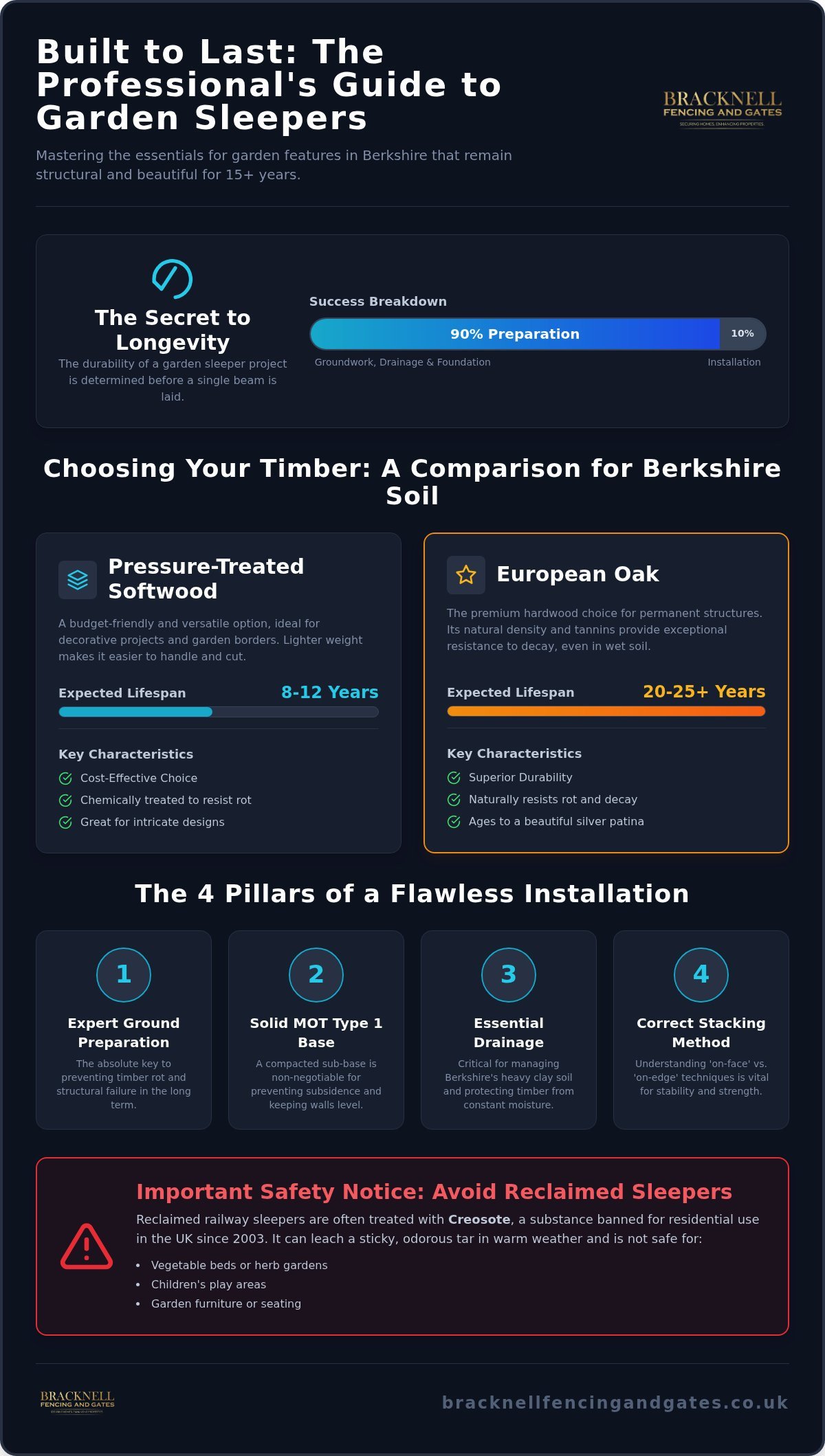
The longevity of a garden sleeper in Berkshire is 90% preparation and only 10% installation. Without addressing the specific drainage needs of our local soil, even the highest quality timber is destined to fail prematurely. You’ve likely seen the results elsewhere: leaning walls, sagging beds, or wood that has rotted through in just a few years. It’s a common concern for homeowners who want a level, usable garden but dread the heavy lifting and the risk of a DIY disaster.
Our 2026 guide to garden sleepers installation bracknell will help you master the process so your garden features remain structural and beautiful for 15 years or more. We’ll walk you through the essential steps to manage sloping terrain and select the right materials for your specific goals. You’ll discover how professional ground preparation prevents timber rot and why the right foundation is the key to a successful transformation. Whether you’re planning a tiered retaining wall or a set of durable raised beds, this guide provides the expert local knowledge you need to get the job done right.
Key Takeaways
- Compare the benefits of budget-friendly softwood versus the 20-year lifespan of European Oak to choose the right timber for your project.
- Understand why structural integrity depends on expert ground preparation and a solid MOT Type 1 base to prevent wall failure.
- Master the difference between “on-edge” and “on-face” stacking methods to ensure your retaining walls and planters remain stable.
- Discover how professional garden sleepers installation bracknell handles the physical challenges of moving 50kg beams for a perfectly level finish.
- Learn the essential drainage techniques required for Berkshire soil to protect your timber from rot and extend the life of your garden features.
Why Garden Sleepers are the Perfect Choice for Bracknell Landscapes
Garden sleepers are heavy-duty timber beams designed for structural landscaping. They offer a natural, warm aesthetic that contrasts beautifully with Berkshire greenery. For many residents, garden sleepers installation bracknell is the preferred choice for managing the town’s varied topography. Local gardens often feature slopes that make traditional lawn use difficult. Sleepers provide a robust way to level these areas without the harsh look of industrial concrete. These features also pair exceptionally well with low maintenance garden ideas Bracknell. They create crisp, permanent borders that stop soil migration and reduce the need for constant maintenance.
The Versatility of Timber Sleepers
A Sleeper wall is a versatile tool for any landscaping project. It allows for the creation of distinct zones within a garden, turning a single slope into a series of functional tiers. This approach is far more efficient than moving massive amounts of earth to create one single level.
- Retaining Walls: These hold back significant amounts of soil to create level play areas for children or flat spaces for patios.
- Tiered Planters: Stacking sleepers at different heights creates a modern, multi-level aesthetic that makes smaller gardens feel much larger.
- Natural Steps: In larger Berkshire estates, sleepers are often used to build wide, durable steps that look more organic and grounded than stone or paving.
Longevity and Durability in the UK Climate
When you invest in garden sleepers installation bracknell, durability is the primary focus. The damp UK climate can be harsh on timber, but modern treatments ensure these structures stand the test of time. Pressure-treated softwood is a popular, budget-friendly choice that resists rot for many years. If you want a long-term solution, European Oak is a premium hardwood. It naturally contains tannins that fight off decay, often lasting over two decades even in direct contact with wet soil.
It’s a highly cost-effective alternative to traditional brickwork. Brick walls require deep, expensive foundations and professional masonry; timber sleepers provide structural integrity with a much faster installation process. Selecting the correct timber for ground-contact projects ensures your garden features remain safe and structural for years to come. This makes them a sensible investment for any homeowner looking to add value and usability to their property.
Choosing the Right Timber: Softwood, Hardwood, and Oak Sleepers
Bracknell gardens often sit on heavy clay soil. This damp environment is challenging for timber. Your choice of material dictates whether your landscaping lasts a decade or a lifetime. For a reliable garden sleepers installation bracknell, we focus on matching the wood type to your specific garden use and budget. The right timber must withstand the lateral pressure of wet soil whilst resisting the fungal decay that thrives in Berkshire’s ground conditions.
Softwood vs Hardwood: A Quick Guide
New tanalised softwood sleepers are the most budget-friendly option for residential projects. Tanalised timber has undergone a high-pressure chemical treatment to prevent fungal decay. These sleepers are lighter and easier to cut, which makes them ideal for intricate designs or decorative borders. However, their expected lifespan in direct soil contact is typically 8 to 12 years.
European Oak is the premium choice for those looking for a permanent structure. It’s naturally dense and heavy, offering an expected lifespan of 15 to 25 years. Over time, it develops a beautiful silver patina that looks stunning in traditional Berkshire gardens. Understanding how to build a sturdy retaining wall involves choosing a material like oak that can handle the weight of water-logged clay without warping or shifting.
Safety First: Reclaimed Sleepers
Reclaimed railway sleepers are often treated with creosote. This substance has been banned for residential use since 2003 under REACH regulations. We strongly advise against using these for vegetable beds or children’s play areas. In warm weather, the tar can leach out of the wood, creating a sticky, odorous mess that is difficult to remove. If you’re unsure which timber suits your project, our team at Bracknell Fencing and Gates can provide expert advice based on your garden’s specific drainage needs.
Modern alternatives now mimic the rustic look of old railway timber without the chemical hazards. These new “rustic” softwood sleepers are treated to modern safety standards, making them safe for family gardens. Choosing the right timber is only half the battle; the success of your garden sleepers installation bracknell also depends on the foundation and drainage systems hidden beneath the surface. Oak remains the superior investment for structural walls, whilst treated softwood is perfect for low-level planters and path edging.
Structural Design: Using Sleepers for Retaining Walls and Planters
Designing a garden structure with timber is about more than just aesthetics; it’s about managing physics. Retaining walls must resist significant lateral earth pressure, particularly in Bracknell where heavy clay soil expands when wet. A poorly designed wall will eventually lean or buckle under this weight. Professional garden sleepers installation bracknell focuses on counteracting these forces through correct orientation and mechanical fixings. Whether you’re reclaiming a slope or building a feature border, the structural method you choose determines the longevity of the project.
Homeowners usually choose between two stacking methods: “on-face” or “on-edge”. Laying sleepers on their widest face is the most stable approach for structural walls. It provides a larger surface area for gravity to hold the timber in place. Stacking them “on-edge” offers a modern, slimline look but requires significantly more internal support to prevent the wall from toppling. For those seeking multi-level garden inspiration, these timber structures work perfectly alongside professional decking installation in Bracknell to create seamless transitions between seating areas and lawn tiers.
Retaining Wall Essentials
For walls exceeding 600mm in height, standard stacking isn’t enough. We often incorporate “deadman” sleepers, which are beams buried perpendicular to the wall and anchored deep into the soil bank behind. This creates a physical anchor that prevents the wall from being pushed forward. We also recommend a slight “batter”, or lean, of about 1 in 10 towards the soil being retained. To hold everything together, we use high-tensile timber drive screws like TimberLoks. These provide much greater pull-out resistance than traditional coach bolts. Finally, a layer of landscape fabric behind the wall is essential to stop soil from washing through the gaps whilst still allowing water to drain away.
Creating Raised Beds and Planters
Raised beds are a staple of Berkshire gardening, but they face their own set of structural challenges. Over time, the weight of the wet compost inside can cause the long sides of a planter to “bow” outwards. We prevent this by installing internal corner bracing and, for longer beds, a central cross-tie. The ideal height for a comfortable gardening experience is usually between 450mm and 600mm, which is roughly the height of a standard chair. To protect the timber, we line the internal faces with a damp-proof membrane or heavy-duty plastic. This creates a barrier between the damp soil and the wood, significantly extending the life of your garden sleepers installation bracknell by preventing rot from the inside out.
Step-by-Step: How to Install Garden Sleepers Correctly
The success of a garden sleepers installation bracknell depends entirely on what happens below the ground. We don’t simply place timber on top of the soil; we build a foundation that can withstand the weight of the Berkshire landscape. The process is physically demanding and requires precision at every stage to ensure the final structure is both level and safe. By following a methodical approach, we eliminate the common mistakes that lead to leaning walls or premature rot.
Preparation begins with Step 1: excavating a level trench. We dig down at least 150mm to remove organic matter and create a stable base. Step 2 involves filling this trench with MOT Type 1 sub-base or a concrete haunch for structural walls. This foundation prevents the sleepers from sinking into the soft clay. Step 3 is the most critical stage: laying the first course. We use a long spirit level to ensure every beam is perfectly flat. Any error here will multiply as you stack higher. In Step 4, we stagger the joints by at least 300mm to ensure the wall acts as a single structural unit. Finally, Step 5 covers backfilling with clean gravel to protect the timber from the surrounding earth.
The Secret to Longevity: Drainage
Standing water is the #1 enemy of garden sleepers in Berkshire. Bracknell’s clay-heavy soil is notorious for holding moisture, which can create a “bath” effect around your timber. If the wood sits in water, even the best pressure treatment will eventually fail. We solve this by using 20mm shingle or clean gravel for backfilling. This creates a void that allows water to drop away from the timber quickly. For larger retaining projects, we install perforated drainage pipes at the base of the wall to divert water to a soakaway or drain. If you’d rather leave this technical work to the experts, you can request a quote for garden sleepers installation bracknell from our local team.
Tools and Fixing Techniques
Professional results require the right kit. We use reciprocating saws for clean, square cuts and heavy-duty drills to drive fixings through dense timber. Hardwood sleepers are particularly difficult to work with; you must pre-drill them to avoid snapping your screws or splitting the wood. We use high-tensile timber screws that are long enough to bite deep into the course below. Staggering joints by at least 300mm ensures the wall acts as a single structural unit, providing the lateral strength needed to hold back tonnes of wet soil. This methodical approach ensures your new garden feature remains structural and beautiful for decades.
Professional Installation vs DIY: Achieving a Long-Lasting Finish in Berkshire
The idea of a weekend DIY project is often appealing, but the reality of handling timber is physically demanding. A single 2.4m oak sleeper can weigh over 50kg. Moving dozens of these beams across a sloping garden requires significant strength and stamina. Beyond the physical toll, the risk of a structural failure is high if the foundations aren’t perfect. We often see DIY walls that have begun to lean or buckle because the ground prep wasn’t sufficient for Bracknell’s heavy clay soil. Choosing professional garden sleepers installation bracknell ensures that your new garden features are built to last 15 years or more without shifting.
When to Call the Professionals
Small, single-course borders are manageable for many homeowners. However, projects involving significant height changes or heavy soil retention require a specialist’s eye. If your wall needs to be higher than 600mm, the structural requirements become much more complex. We use heavy machinery for excavation and soil removal, which is often impossible for DIYers to access or operate safely. Bespoke carpentry, such as complex mitre cuts for a premium finish, also requires specialised tools that aren’t found in a standard domestic shed. If your garden has difficult access or requires tiered levels, a professional team can navigate these hurdles efficiently.
Why Choose Bracknell Fencing and Gates?
We pride ourselves on being a “safe pair of hands” for any property improvement. Our team has deep local knowledge of Bracknell’s ground conditions. We understand exactly how much MOT Type 1 sub-base is required to keep a structure level for decades. We only use high-grade, sustainably sourced timber that is appropriate for the British climate. Our services extend beyond sleepers; we offer a complete landscaping solution, including garden gate installation to finish your boundaries perfectly.
Every garden sleepers installation bracknell we undertake includes professional site clearance. Landscaping creates a significant amount of waste, from excavated clay to timber offcuts. We handle all waste removal, leaving you with a clean, usable, and level garden space. This saves you the cost and hassle of skip hire and multiple trips to the local tip. By choosing a local specialist, you gain peace of mind knowing the job is done right the first time, protecting your property value and your back.
Transform Your Bracknell Garden with Durable Timber Features
Achieving a level, usable garden in Berkshire requires more than just stacking wood. The success of your project depends on selecting the right timber and ensuring your foundations can handle the local clay soil. Whether you choose the long-term durability of European Oak or the versatility of treated softwood, correct drainage is the only way to protect your investment from rot. Structural integrity is paramount for retaining walls that must withstand significant earth pressure over many years.
Handling 50kg beams and excavating deep trenches is a significant physical undertaking. Our team provides the local expertise and heavy machinery needed for a professional garden sleepers installation bracknell. We focus on precision, from perfectly level first courses to secure internal bracing. This methodical approach ensures your garden remains a stable and beautiful space for decades. If you’re ready to start your renovation, request a free quote for your Bracknell sleeper project today. It’s a straightforward way to secure a safe pair of hands for your next landscaping transformation.
Frequently Asked Questions
Do garden sleepers need a concrete foundation?
Not always, but the decision depends on the wall’s height and purpose. For low-level decorative borders, a compacted MOT Type 1 sub-base is usually sufficient. However, for structural retaining walls, we recommend a concrete haunch to prevent shifting. This foundation is essential in Bracknell because our heavy clay soil moves significantly during wet weather. A solid base ensures your garden sleepers installation bracknell remains level for years to come.
How do I stop my garden sleepers from rotting?
Proper drainage is the most effective way to prevent rot. You should always backfill behind your sleepers with clean gravel or shingle to allow water to drain away from the timber. Additionally, lining the inside of planters with a damp-proof membrane creates a vital barrier between the wet soil and the wood. Choosing a naturally rot-resistant timber like European Oak also significantly extends the lifespan of your garden features.
What is the best way to fix garden sleepers together?
We recommend using high-tensile timber drive screws, such as TimberLoks, for the most secure connection. These fixings offer superior pull-out resistance compared to traditional coach bolts. It’s important to use two screws per joint and ensure they are long enough to bite deep into the course below. If you’re working with hardwood like oak, you must pre-drill the timber first. This step prevents the wood from splitting during installation.
Can I use sleepers for a retaining wall higher than one metre?
Yes, but walls over one metre require specialist structural design and likely a structural engineer’s input. For these heights, standard stacking is insufficient to resist the immense lateral pressure of the soil. We incorporate “deadman” sleepers or vertical steel posts to provide the necessary reinforcement. In Bracknell Forest, you must also check if planning permission is required, especially if the wall is near a highway or within a conservation area.
Do I need planning permission for sleeper retaining walls in Bracknell?
You typically don’t need permission for walls under one metre unless they are next to a highway. If the wall is over one metre tall near a road or over two metres elsewhere, planning permission from Bracknell Forest Council is usually required. Conservation areas have stricter rules, so it’s always best to check the local planning portal. Our team can help advise on these requirements during the planning phase of your garden sleepers installation bracknell.
Which is better: softwood or hardwood sleepers for a raised bed?
Hardwood, specifically European Oak, is the superior choice for raised beds. It’s naturally dense and doesn’t require the same chemical pressure treatments as softwood, making it safer for growing edible vegetables. Oak sleepers also have a much longer lifespan, often lasting over 20 years. While tanalised softwood is more budget-friendly and easier to cut, it won’t offer the same long-term durability or aesthetic appeal as a premium hardwood structure in your garden.
How long do tanalised softwood sleepers actually last in the UK?
Pressure-treated softwood sleepers usually have an expected lifespan of 8 to 12 years when in direct contact with the soil. This duration can vary based on the local ground conditions and how well the drainage was managed during construction. In the damp, clay-heavy soil found across Berkshire, without proper gravel backfilling, this lifespan can be shorter. If you want a feature that lasts 15 to 25 years, we suggest investing in new oak sleepers.
Are railway sleepers safe to use for growing vegetables?
Reclaimed railway sleepers are not safe for vegetable beds because they were often treated with creosote. This substance has been banned for residential use in the UK since 2003 as it can leach into the soil and your crops. For growing food, you should always use new, untreated oak or modern tanalised softwood sleepers. These materials are safe for family gardens and don’t pose the same chemical risks as old, tar-soaked timber.